
Find opportunities that are right for you to continue your education outside your home country.
Connect With Us
© 2025 Freedom Degree
Freedom Degree, Inc. is a 501(c)(3) nonprofit organization. © 2025 | Powered by Strapi

Find opportunities that are right for you to continue your education outside your home country.
Connect With Us
© 2025 Freedom Degree
Freedom Degree, Inc. is a 501(c)(3) nonprofit organization. © 2025 | Powered by Strapi
Dec 12, 2025
We are summarizing the 2025 results with the President of the Russian-American Science Association, sharing a story about how Russian scientists in exile receive help and who provides it, as well as discussing the future of Russian-language science abroad.
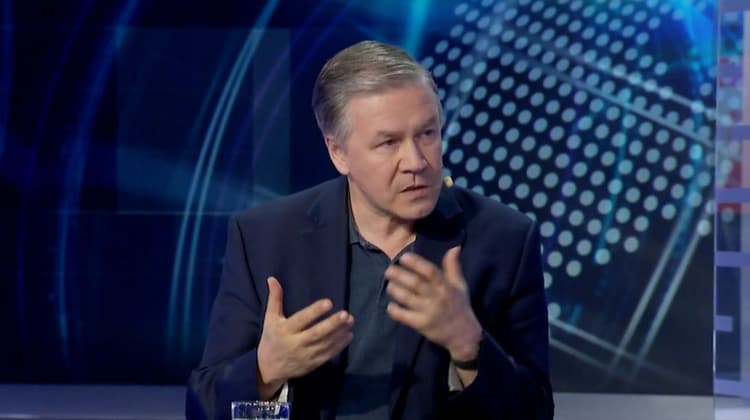
In January, you were elected head of RASA, the Russian American Science Association, and soon half of your presidency will already be behind you. What have you managed to accomplish during this time, and what haven’t you?
First of all, it’s incorrect to call our association “Russian American,” (translator's note: the original had российско-американская) because that creates the impression that there is some kind of cooperation between Russia and America that we support. Indeed, in the past such cooperation existed, and the association appeared in 2009 on the wave of mega-grants and new funding for Russian science, when the Russian government really did decide to finally invest a bit in the scientific and educational sphere. That was when federal universities, research universities, and later the “5-100” program appeared. It was a program of excellence, that is, of increasing the international competitiveness of Russian science and Russian universities. The very name “5-100” implied that after some time, five of the best Russian universities would enter the top one hundred universities in the world. This did not happen; moreover, Russia later veered away from this path, and everything ended with the war against Ukraine.
But in reality, at the outset, people who had achieved great success in American and world science — those of Russian or Soviet origin — decided to create a kind of club to share experience, because they were being invited to Russia to help develop new international scientific laboratories. These were big names, such as Vladimir Zakharov, who had long been working in the United States and was at the same time an academician of the Russian Academy of Sciences. Hopes were placed on him and others like him to develop Russian science on a fundamentally new level. In this sense, at one time the cooperation of Russian-American scientists and Russian scientific institutions was truly a Russian American endeavor. However, our association is a purely American NGO; it is registered and operates under the laws of the state of Massachusetts, is non-political, and cannot assist any other states. Certain authorities in the United States oversee this. Therefore, it is a Russian-speaking American association; in English it is written “Russian-American” with a hyphen, just like Chinese-American, Italian-American, African-American. In other words, these are Americans, but Russian-speaking, people of Russian culture. That is why we now increasingly emphasize that it is the “Russian-speaking American Science Association,” or the “American Russian-speaking Science Association.” Although the official English abbreviation remains the same: RASA, Russian-American Science Association.
You asked what we’ve achieved over this year. We’ve achieved quite a lot; there has been a certain leap in our development, and we have become a truly global association. I myself joined the association at the end of 2022, when I realized that after the start of the war RASA had taken the right side of history. Before that, I had some doubts, which have now completely disappeared. I saw how creatively my colleagues approach the main task — preserving and developing an interdisciplinary scientific Russian-language discourse, a way of communicating, and doing so at a high international level. And we still have the task of enlightenment before us. That is why we created a project called T-invariant: it is a media outlet for scientists, but not only for scientists. We are concerned about the course of events and dream that one fine day science and education in Russia will be restored. One way or another, we will be given a window of opportunity to carry out a democratic transition, and that transition must be carried out by people of science and people from the university sphere. Therefore, we want to preserve this environment and our shared scientific discourse. Moreover, we decided to make use of the sad situation in which many scientists had to leave Russia because of the war. And therefore, since 2022 we have been thinking about how to continue developing, given the need to support these people and the fact that they constitute a very significant social and cultural capital both for the Russian diaspora and for a future democratic Russia. That is why we began working with them, and one of the important steps in the association’s development was the creation of RASA’s European Committee.
In April 2025, the RASA Board of Directors approved the statute of the European Committee and confirmed its membership. The historian Dmitry Dubrovsky, who is known in the diaspora for also working on issues of academic freedom, became its first chair. But it is also important that the first vice president from Europe was elected. We now have two vice presidents. There were presidencies with no vice presidents at all, but now we have two. They are Anna Krylova, a chemist from California who, incidentally, has just become a laureate of the Gamow Prize, which our association awards every year to two outstanding scientists. The second vice president is Andrei Yakovlev, an affiliated member of the Davis Center at Harvard University, working in Berlin at the Free University. Andrei Yakovlev is very active in Europe in matters of our development. One could even say Eurasian development, because we also involve people from those countries of the former Soviet Union that are not formally part of Europe.
Thanks to Andrei Yakovlev and his colleague at Berlin’s Free University, Alexander Libman, we were able to hold our European conference for the first time this year — and quite successfully. Since 2010 RASA has held its annual conference every year, but that is an American conference. Gradually people from Europe began to take part in it, but it remained an American event. And we have just concluded — also very successfully — the 16th RASA conference at Rutgers University in New Jersey, where I work. When we conceived the conference in Europe, we chose Berlin, bringing in colleagues from Georgia, Kazakhstan, and the United States.
In 2025 we also began a series of interviews published on our YouTube channel, dedicated to the history and present of RASA. The very first interview was given to us by academician Roald Sagdeev, a veteran of our diasporic scientific movement, an academician of the Academy of Sciences in Russia and a professor at the University of Maryland. He turns 93 this year, and he remains very active and helps us a great deal. In particular, he helped us organize not just one but two sessions on physics and astronomy as part of our most recent, 16th conference in the U.S. After that, there were conversations with several other key people in our association. This project will continue.
In addition, we created a new website. This is not a website for RASA — RASA has its own official website, where you can find our documents and where the most important information about our association is posted. The new website is designed to be used by various scientists in the diaspora, representatives of a wide variety of scientific and educational groups. We called this platform ARCA, which in English stands for Academic Russian-Speaking Community Abroad. We invite everyone there, including the Freedom Degree community, anyone who wants greater visibility, who wants to exchange experiences and ideas. Let’s be friends.
You’ve already mentioned that part of your work involves supporting academic refugees from Russia. Could you describe in more detail what this assistance from RASA looks like?
Even before I became president, our CEO, Professor Sasha Kabanov of the University of North Carolina, had the idea to create a website to help exactly these people whom we might call academic refugees. It is a mentoring website, where established scientists would meet those in difficult circumstances and offer important advice. Primarily Ukrainian, Russian, and Belarusian scholars who found themselves outside their countries because of the war. However, this project is currently frozen. We created the necessary infrastructure, a dedicated database, and the option for people interested in such support to register on the site. We already have more than 30 advisors, mentors — people who are ready to provide both academic support and possibly some practical support. But this requires funding. We need an intermediary, some kind of mediator or curator for this project, someone who would match clients with those providing services on the mentoring site. But for now, we do not have the funds; we do not have such a person. At the same time, it must be said that our European colleagues note — probably rightly — that the demand has changed recently. There is less interest in this kind of mentorship, because people are managing to find their footing, or already have, or are leaving academia altogether, which is unfortunate. And some have even returned to Russia.
The most important thing is that we somehow need to bring our diverse community together, which is precisely why the ARCA website was created. This platform was created to overcome the divide between different scientific groups in the diaspora. It is clear that there are objective differences between these groups and individual people along at least four parameters. I label them in English as DEGG: Disciplines, Emigration Waves, Generations, and Geographies.
We want academic people not to feel cut off from others, unlike the political diaspora, which I cannot call an “opposition,” because science recognizes the applicability of the term “opposition” only when there is a legal and competitive political process within your country. There is a political opposition and activists — whom I call, scientifically, “the resistance.” In their milieu we inevitably see a lot of squabbling, but the academic environment should not be like that at all. Arguably our situation is more positive than in the creative, musical, or cultural spheres, where people often have more to divide among themselves. Scientists — primarily, of course, those we call the “old guard” — are long established and well situated. The leading stars of our association are recognized figures in world science. And what they do together with RASA is a sincere desire to help others, not to lose one another, and to try — within their own small field — to change the situation for the better.
We are trying to make it clear to new people arriving in Europe that we exist, that RASA is ready for dialogue, even if at the moment it cannot provide practical assistance due to lack of funds. But we are here, we have authority, and we are the most representative, the most significant organization when it comes to uniting Russian-speaking researchers in the diaspora. There are other attempts to create something inter-group in Europe — some kind of alliance of various academic forces — primarily aimed at protecting their rights in EU countries. But this process is developing with great difficulty, and at a certain point our colleagues in Europe realized that it would be good to take advantage of RASA. And this process has begun. Perhaps we will create a European branch of our association, but that is for our European members to decide, and then the RASA Board of Directors will need to approve it. RASA also has a Coordinating Committee. It is its political and advisory body. It does not make final decisions, but it advises RASA’s leadership, and then the Board of Directors adopts formal decisions — such as the creation of the European Committee.
It is wonderful that for the first time we managed to hold two conferences this year. We held a special session about our association as part of the conference in Berlin. You can find the video — everything is on RASA’s YouTube channel. There we talk about our association together with Alexander Kabanov, whom I already mentioned, and Igor Efimov, who was the first president of RASA. Incidentally, it was Igor Efimov who at one time insisted that democratic procedures within our association be strictly observed. This included the introduction of a rule that the presidency cannot last more than two years. It so happened that the European association, and even more so the Asian one, effectively ceased to exist, and now we are taking on the mission of reuniting Russian-speaking scholars around the world. Our European Committee even includes one colleague from South Africa, and colleagues from South America are asking to join us. So we have serious growth prospects.
Which organizations would you like to bring together into a common movement to support Russian academic refugees?
It’s important to note the role of Dmitry Dubrovsky, who for quite a long time has been trying to bring together different academic groups in Europe so that they can jointly present their position when communicating with European universities, ministries, and even the European Commission — though that is still a long way off. Scholars who fled the war and who speak Russian have many problems. There are visa issues, status issues, and any number of other issues. We know about problems related to banks, accounts, and so on. Therefore, people naturally try to unite in order to clearly articulate these problems and explain to their European counterparts why they need to be addressed.
There is one structure that supports this — the Eastern Academic Alliance. This organization provides some assistance in individual cases to various initiatives. In particular, they helped cover part of the expenses for our first European conference, and we are very grateful to them for that. But so far we don’t see different groups in Europe and Eurasia creating some kind of umbrella organization — registered or unregistered — that would represent their interests. At the same time, RASA, having obtained a strong European wing, is ready to take part in such discussions in every possible way. It’s important to understand that what sets things into motion are specific actions. For example, our Berlin conference. For example, the fact that we are now discussing the possibility of holding a second European conference next year.
And in general, are there cases of successful diasporic academic communities?
This is always a major challenge. Because if the situation drags on, then the next generations of Russian-speaking scholars in the diaspora will not be interested in supporting diasporic work. We are counting on the fact that a democratic Russia, or at least a non-Putin Russia, is not a very distant future. Therefore, people who in most cases still will not manage to establish themselves successfully in science and education in the West will be able to return and help their country. There have been similar cases in history. For example, in his first interview for our channel, academician Roald Sagdeev gave the example of the Italian scientific diaspora after the Second World War. Many later returned to Italy or other European countries. So this has happened historically. People united along cultural and linguistic lines, even though everyone used English as the language of scientific superiority. Then these initiatives gradually faded away, just as by the early 21st century the Russian Academic Group, which had arisen in the West after the Bolshevik revolution, faded away. We do not want that to happen, which is why we are very concerned about ensuring that the younger generation actively joins us.
We are currently developing a strategy for how to ensure that young Russian-speaking scholars stay with us, that we work together on a common cause, and that everyone understands the benefit of this work. Yes, in the U.S. there are cultural scientific communities: Chinese, Indian. You can observe how at conferences in various disciplines representatives of these cultures cluster together. And among them, by the way, interaction between the “old guard” and young scholars is more noticeable. We would like to see more of that among Russian-speaking scholars. We truly see meaning in our existence. And it is largely, if not entirely, determined by the terrible situation that has now unfolded. When your country does what it is doing, you must respond, even if your possibilities are limited. And we must do everything we can to create additional space for people of good will. Because in the end it is not some ideology, or military force, or diplomatic tricks that prevail, but ideas of humanism and goodwill. This is what should unite everyone. And we believe that in the scientific community such a shared foundation is more present than in some other communities.
What would you advise scientists and students in Russia who are currently experiencing pressure because of their political position?
The most important advice is to try to survive. People need to preserve themselves, preserve their health, preserve a clear mind. We help them as best we can; each of us maintains some contacts with people in Russia. We even had a project within the T-invariant media called “Homeland Notes from the Underground.” I was the one who ran that project. We collected about 30 anonymous interviews with people who remain in Russia and work in universities and scientific institutions. Clearly these are people taking risks — they are against the war, yet they themselves need communication. For them, talking to us is a form of therapy, and at the same time they are a breath of fresh air for others. As a result, people who read these interviews recognize themselves in them and thank us very much for this project. Therefore, the most important wish is to maintain a clear understanding of the situation while preserving moral indignation — not becoming accustomed to the horror being committed. The moment will inevitably come when all of us together will have to restore science, culture, education, and normal social relations in our long-suffering country. That’s how it is.