
To Norway with a scholarship
May 06, 2025
Mikita Kuchinsky doesn't regret switching from a Russian university to a Norwegian one and explains why
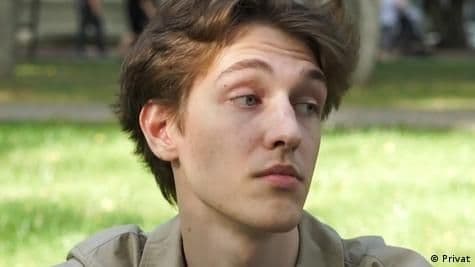
Mikita Kuchinsky is a freelance journalist and has been working in the media since 2020, back when he was a student at a Russian university. In addition, he has been involved in political activism, even running as a candidate for municipal deputy in his hometown of Lytkarino. According to Mikita, this activist experience played a great role in his future enrolment at a Norwegian university.
– As early as high school, I had a pretty clear idea of what I wanted to do: journalism. It seemed to me that the best way to do that was to get a specialized education. So I enrolled in a program called international journalism in Moscow.
Mikita was quickly disappointed in his choice. He faced a situation usual for Russia - the low quality of higher education.
– From about the first week, I realized that this was absolutely not something that would help me in my professional career. The academic level was about zero in most disciplines. The professors were constantly going off topic, eventually forgetting their subject matter. There were no alternative teachers and the program was just very weak, to describe it in a nutshell.
– In addition, there were a lot of political points that I could not agree with. I was already involved in activism at that time, I was running for election, I participated in rallies, I was detained. Of course, I could not agree with the position of supporting Putin and the current government. When you wake up at 5:30 a.m., leave at 6:30 a.m., spend an hour and a half commuting to the university, and at 8 a.m. in class listen to a political science professor thanking Putin for the Sochi Olympics and the annexation of Crimea - this is, to put it mildly, disgusting.
Nikita says that he had originally planned to stay in Russia and continue his studies, enroling in a more prestigious university to finally get a good quality education. The tragic circumstances of the beginning of the war prevented this. In addition, Nikita now simply cannot return to Russia and study there - he has publicly worked for an organization that the Russian authorities have declared “undesirable”. This clearly jeopardizes his safety.
– I immediately realized that propaganda narratives would take over all Russian education. I decided not to continue my studies in Moscow and paused my studies altogether. I went to Lithuania and continued to do journalistic work from there.
After a year of living and working in Lithuania, Mikita decided that he needed to move further down the educational track. Around the same time, he was offered the opportunity to attend a university in Norway on a scholarship program. The study takes place at the University of Tromsø, in northern Norway, in a program called "Peace and Conflict Transformation". This is a Norwegian government program that provides scholarships and covers tuition for students from developing countries, especially political activists at risk of persecution.
Mikita describes the experience of studying in Norway as both more enjoyable and more productive than in Russia. In Norway, he notes the openness of the university environment and the lack of unnecessary control, which creates a sense of free space.
– In Moscow, access to the university was limited by some endless turnstiles, guards, and passes. Here in Tromsø, the library is staffless even on weekends and you can enter the building around the clock if you have a student card.
According to Mikita, the second major difference is that at his new university there is no attendance control in strange forms. In Moscow he had the impression that he was still in school.
– In Norway, in contrast, the responsibility for learning is entirely yours, you decide which classes are important to you and which are not, and you try to remember what commitments you have made. All of this has a much better effect on intrinsic motivation.
One significant change for Mikita was the amount of academic literature in English that he have to read. This has seriously expanded his knowledge. In addition, the program has been successful in structuring his courses with an emphasis on practical application of knowledge and academic writing from the first days. Despite his lack of academic background, he was able to adapt quickly.
– I caught up pretty quickly and was able to overcome the fear of not being able to study in English. The first academic session was a big stress for me, although in the end it turned out that there is nothing extraordinary about it, you just need to read regularly and logically put your thoughts into the text.
Mikita's expectations from his studies in Norway have been fully met. Now he is in the second year of his master's program and is working on his thesis. Speaking about life abroad and everyday aspects, Mikita notes the pros and cons.
Adaptation in Norway was difficult because of the harsh climatic conditions, especially polar days and nights, which affected the student's sleep and mental state. Socialization is made more difficult by the fact that Mikita does not know Norwegian. Another difficulty was the remote location of Tromsø, which makes traveling to Europe expensive.
– When I arrived, there were polar days and it really messed with my sleep. Then there were polar nights in the winter, and it had a big impact on my mental state.
But life in Norway has its advantages. As Mikita says, even a job which is “unprestigious” in the Russian context can provide a decent income, which relieves some of the anxiety of students. They can work part-time and study at once.
And this is what Mikita says about his future:
– It is very hard to make long-term plans in emigration. In terms of my studies, I am now thinking more and more often that I could stay in academia and continue to do research. I can't yet outline a specific trajectory, but I am thinking about it.
I can't imagine such a return until there are fundamental political changes. I have little hope for the near future, so I am trying to accept it and slowly build my life in exile. Nevertheless, I never cease to believe that one day I will be able to return to Russia in peace.

Find opportunities that are right for you to continue your education outside your home country.
Connect With Us
© 2025 Freedom Degree
Freedom Degree, Inc. is a 501(c)(3) nonprofit organization. © 2025 | Powered by Strapi