
Find opportunities that are right for you to continue your education outside your home country.
Connect With Us
© 2025 Freedom Degree
Freedom Degree, Inc. is a 501(c)(3) nonprofit organization. © 2025 | Powered by Strapi

Find opportunities that are right for you to continue your education outside your home country.
Connect With Us
© 2025 Freedom Degree
Freedom Degree, Inc. is a 501(c)(3) nonprofit organization. © 2025 | Powered by Strapi
Oct 14, 2025
We discuss architectural education in Russia and Sweden, as well as job searching
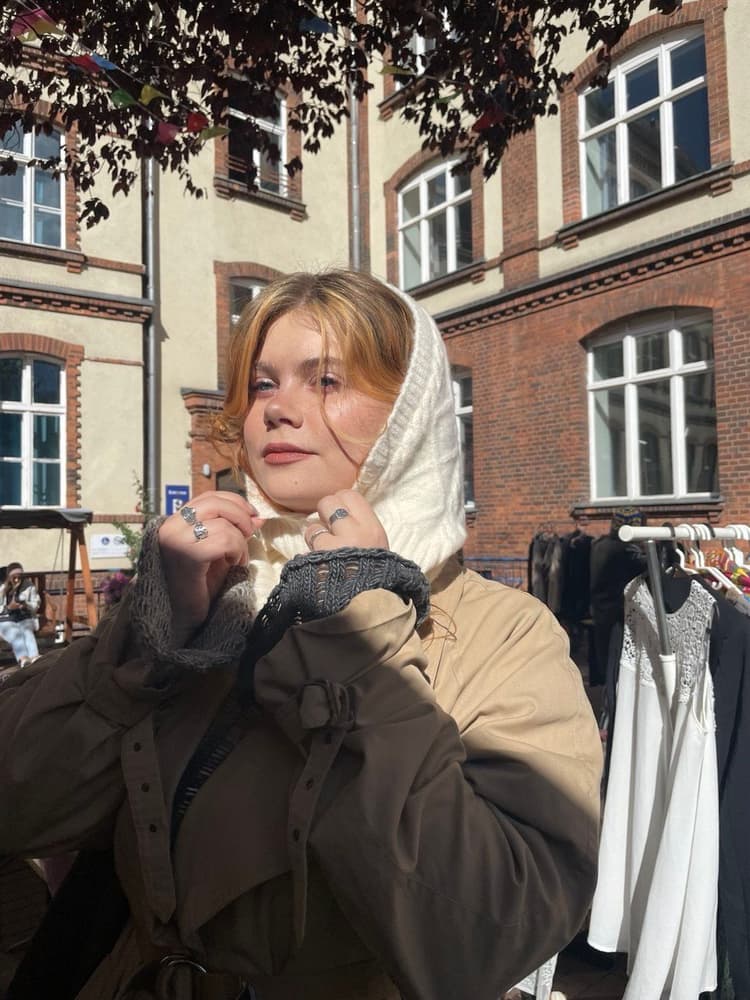
About Alina and her studies
My name is Alina (25) I am from Russia, from Moscow and I am ethnic Ukrainian. Now I live in Berlin. In May this year I completed my Master's degree in architecture in Sweden, at Lund University.
I graduated from the Moscow School of Architecture. To be honest, my studies were not much different from education in Europe. It was a neighbouring building, a nearby faculty with the better-known British Higher School of Design. In terms of Russian regulations, it was not a bachelor's degree, but we received British diplomas through a special partnership programme. What is particularly unusual for my Bachelor's degree in Russia is that I was taught architecture for only 3 years. This is in principle impossible in the Russian Federation, where such (bachelor's) education lasts 5 years.
Since MARSH (Moscow Architectural School - ed.) was designed as a kind of innovative school, a challenge to MARHI (Moscow Architectural Institute - ed.) and all the Soviet norms of architectural design, everything was different there. The number of classes, the list of subjects, their content. At MARSH we did not have such subjects as physical education, astronomy, and others which were not related to architecture. We had three or four subjects, each of which was usually given a whole study day. There was individual work, presentations, lectures, and group work. We learnt according to the patterns familiar to European art education. During the periods of final exhibition projects and exams, the London commission came to visit us. That was a good stepping stone to continue education in Europe.
The administration and management were (and probably still are) quite opposed to the Russian regime. In principle it was hard to imagine any Putin supporter studying at our university. We had admission interviews, the purpose of which was, among other things, to understand our views on life. They didn't necessarily ask about politics, but applicants should be open to the idea that architecture is an instrument of change. And, of course, as professionals we needed to understand the problems of the country.
In addition, many teachers openly expressed anti-Putin views, after which the school faced pressure. While I was studying at MARSH, the Moscow Mayor (Sobyanin) revoked our college licence. We turned into an additional education and lost student benefits such as transport cards. Fortunately, none of this prevented us from graduating and getting British degrees.
After the full-scale invasion of Ukraine began, my school came to an end. It was now subject to state educational standards. The undergraduate programme was changed to a long, five-year bachelor's degree. They added physical education, languages, maybe even history, and introduced the Unified State Exam for entry. No more British degrees. The business has closed down. But I finished my education in 2020 and left Russia earlier.
In general, the first stage of education in Russia in my case did not differ much from the European education in Sweden. But there is one big difference! In Sweden, they don't work like that. In Moscow, it was absolutely normal for us to work from 10am to 10pm. In my Swedish school we worked strictly from 9am to 5pm, after which any group work was impossible. In Sweden, free time and leisure are very much valued. I was fine with that.
About her attachment to Sweden
I didn't think about going anywhere other than Sweden and didn't pay much attention to the list of the world's top architecture schools, although my classmates were always talking about them and preparing to go there. I decided to focus on the country I really want to live in. I have been in love with Sweden since I was a little girl. I grew up on Swedish children's and teenage literature, I was there at a very young age and dreamed of going back there. I even learnt Swedish while living in Moscow.
In Sweden, I studied on a fee basis. I didn't qualify for Sweden's most important scholarship - it required two years' work experience, which I didn't have. This scholarship, unfortunately, is now closed for Russians, but it has been reopened for Belarus nationals. And this is very good news. I hope that as many Belarus students as possible will find out that it is possible to apply for this scholarship and thus go to study. The main consideration is your motivation letter, you just have to convince the admission commission that the education is suitable for you.
About the cost of living and tuition
My department is one of the most expensive in Lund, because we have to use a huge number of workshops to study. There are 3D printers, lasers, and all kinds of complex materials. All this is included in the cost of education. The funny thing is that when I studied during the Covid period, many studios were closed, but the final price of education was not reduced. Fortunately, I was lucky and my parents were able to pay for my studies.
The expectations of my studies were fully met, if not even more so. Lund University is consistently ranked in the top 100 best universities in the world, which is quite a high position. To be honest, I expected very demanding and stressful work, but everything turned out to be very ‘Swedish’, very gentle and relaxed. We studied at a relaxed pace what makes Swedish architecture Swedish: wood as a material, the use of daylight in design. All sorts of nice, cosy things that you just don't get a chance to talk about in a university like, for example, MARKHI.
In Sweden, small projects with great detail and depth are welcome. Beautiful graphics, the ability to present yourself and tell your story. It is important to note that throughout our studies we were not given marks, as it is believed that architecture is an art, and art can be subjective. Therefore, everyone who turned up for most of the classes and wrote their diplomas received passing grades. It was a breakthrough for me that studying could be such that you could study surrounded by nature, you could have time for travelling, some side projects. So I relaxed and regained my energy.
On how to balance work and study
Then I started to notice that graduates were absolutely unable to find a job, especially those who did not have internships in Europe. So I started looking for internships at a furious pace in the third semester of my four semesters. Here, too, I was extremely lucky. I was offered an offer for a long internship at a big company in Denmark. I put my studies on pause in order to work for two years. During this period I still managed to get an Erasmus scholarship for working students.
Then it became clear that with an architectural degree it is quite difficult to get a job in Europe and it is difficult to balance work and study. I dragged out my sabbatical as much as I could and then decided to move from Denmark to Berlin. This is where I now live and work, I joined an internship at another company and then even got a long-term contract there. In the end I decided to finish university in Lund. I managed to do this without interrupting my work in Berlin.
Germany has a lot of difficulties with their infamous bureaucracy. I was cheered up in this respect by Sweden and Denmark, where you only need a fingerprint when applying for a work visa. Everything is very clear at every stage of the paperwork, all services exist in digital forms with a very clear interface, instructions, with few requirements. In Germany, the lists of documents, certificates and letters that were required of me were sometimes just anecdotal.
About life's plans
Actually, it's rather funny, but I won't abandon my goal to return to Sweden. But the plans are being rearranged a little bit. I want to gain work experience in Germany, get a residence permit here (which I can do in a year), and maybe even citizenship. And already with these means, with one more European language in the kit, I want to try to get to Sweden again. I really hope that this country is waiting for me too!
Yes, in Europe it is hard to find a place to live, to find a job, to get all the documents, to get them in time. Absolutely nothing in Germany was easy for me. But I am glad that I managed.