
To Switzerland for opportunities to engage in Arctic research
Feb 19, 2025
Biogeographer Vitalii Zemlianskii tells about Swiss education and it's difference from Russian
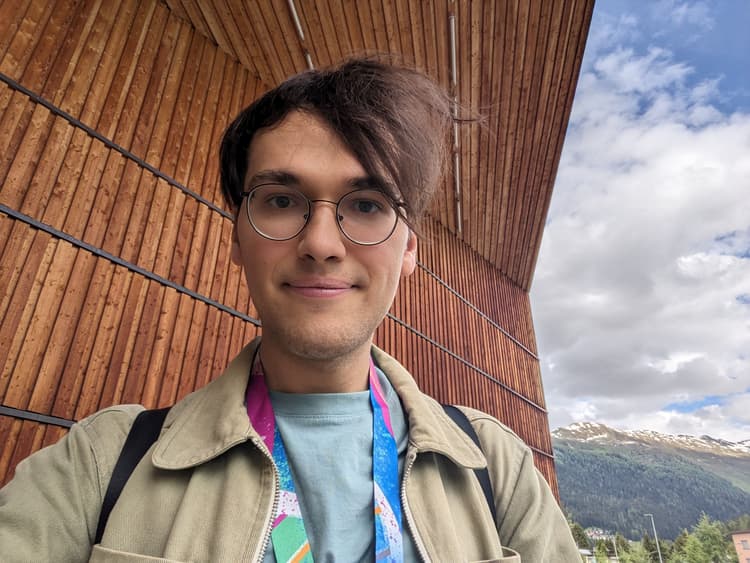
My name is Vitalii Zemlyanskii. I'm an ecologist, biogeographer, Arctic researcher, and activist. I was born and grew up in Vladimir Oblast and attended Moscow State University through the All-Russian Geography Olympiad. I studied biogeography at the Faculty of Geography. I've always been interested in the geography of vegetation, particularly tundra ecosystems. During my studies at Moscow State University and at the University of Zurich, I have focused on the Russian Arctic, modelling tundra species richness, systematising vegetation knowledge, and examining the influence of industrial activity on tundra ecosystems.
This work would be difficult without field research, which has unfortunately been unavailable in Russia in recent years. Despite this, I would like to continue working in Russia and collaborate with both Russian and foreign colleagues. Even in the future, I could see myself working at a Russian university if the country becomes peaceful and democratic, or even sooner, if there is a chance for change.
I am grateful to the Geography Faculty at Moscow State University for teaching me the fundamentals of ecology, biology, and geography. The educational quality varied: there were some great courses, but there were also some that were just ordinary. MSU education was less specialised than Swiss education, however this 'multifacetedness' was often formal. For example, economics and sociology courses for geographers at Moscow State University are not as well provided as one might expect.
In terms of admissions for my Swiss PhD studies, the most important factors are clear project ideas and the supervisor's readiness to support your project. At the time, the chances of receiving a Swiss government scholarship were 50-50%, but I'm not sure what the situation is now. When I applied to the University of Zurich in 2019, things were very different. Now, entering students confront significantly greater challenges. The bureaucracy was relatively straightforward, except for the first time, I had to get my stipend in cash at the university cashier's office until I obtained my residency permission and bank account. The irony is that in order to apply for the PhD, I needed a school diploma, which I previously regarded as useless paper. However, school grades are quite important in the Swiss education system.
Overall, studying in Switzerland met my expectations, it is a very scientifically oriented country. Researchers here are free of bureaucracy, funding problems and political pressure. After defending my thesis, I continue to work at the University of Zurich, although I plan to move to another country to further my scientific career. My experiences of living in Switzerland are mixed, with more positive aspects. I feel safe here; I can do science without counting every cent like I did in Russian graduate school. However, I miss my community in Moscow. I have friends and acquaintances in Zurich (primarily other migrants from various countries), but I feel disconnected from the local social environment. Nonetheless, the opportunity to conduct research makes up for many challenges.
I aim to conduct additional research on the Arctic's biogeography and ecosystem change. I have begun developing a project to look into the influence of building infrastructure on tundra vegetation, and I am very excited to see it complete! I'm not sure where yet, but I'll look into several options. I'm also interested in the interaction between biogeographic study and social sciences. I'd like to discover common ground between biodiversity studies and critical humanities thinking, but this is more of a direction than a ready plan. In any case, there will always be enough things to research. Of course, I'd like to settle down in one place for a long time and plan for the future, but it appears to be an unaffordable luxury at the present.

Find opportunities that are right for you to continue your education outside your home country.
Connect With Us
© 2025 Freedom Degree
Freedom Degree, Inc. is a 501(c)(3) nonprofit organization. © 2025 | Powered by Strapi